Go back to innovation in action
Innovation
From timetables to real-time transport management
ICT Group introduces Traffic Management of the Future
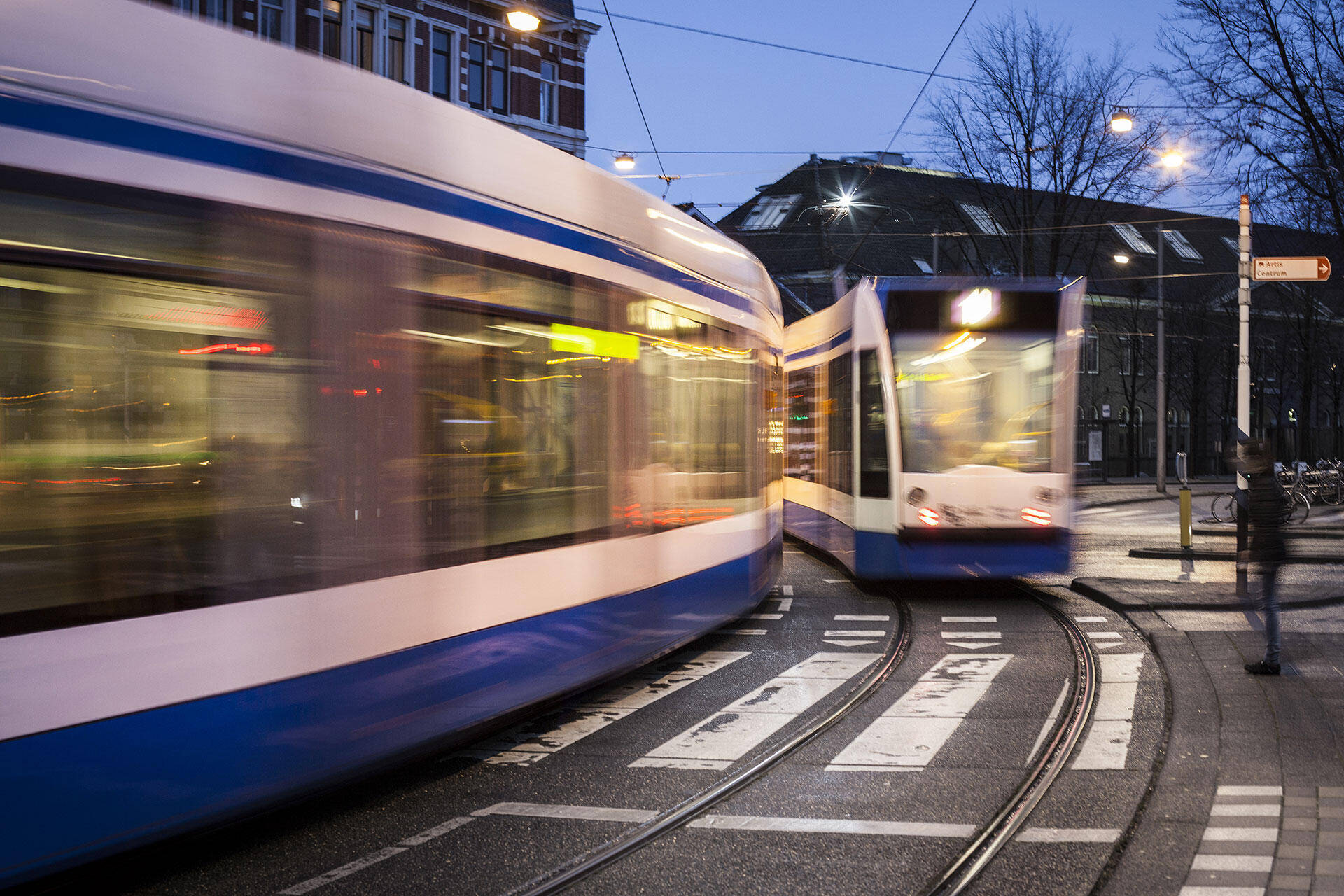
Increasing integration and electrification, combined with shortages of staff and vehicles, are making public transport increasingly complex. Traditional approaches focused on punctuality are no longer sufficient. With Traffic Management of the Future, ICT Group aims to put traffic controllers back in control.
“Public transport is under enormous pressure,” says Martijn van Aartrijk, Head of Public Mobility Innovation at ICT InTraffic. “Transport operators are doing what they have been doing for more than fifty years: running services according to timetables. They draw up their schedules at the beginning of the year and then try to stick to them as closely as possible for the rest of the year. In the past, this generally worked well. Traffic was lighter, and vehicles and drivers were readily available. But that is no longer the case. Transport operations have become far more complex. There are shortages of staff and vehicles. Congestion on the roads causes disruption, accidents are more frequent, and roads are often closed for maintenance. Operators want to run more services with fewer resources, yet they face increasingly severe penalties for cancelled services.”
And there is more, Van Aartrijk points out. Digitalisation has expanded to include payment systems, passenger information and apps. Traditional public transport networks have become increasingly interconnected with other modes of transport, such as shared bicycles and car-sharing services. Electric vehicles introduce additional challenges, from ensuring timely charging to dealing with grid congestion.
“Everything is interconnected. When disruption occurs, the rest of the transport chain feels the impact, often for a considerable time afterwards. The effects ripple throughout the entire organisation and have financial consequences too. Traffic controllers have to make decisions without being able to fully assess the consequences, let alone manage them.”
Traffic Management of the Future
To address these challenges, ICT Group is introducing Traffic Management of the Future. As complexity increases, traffic controllers need greater support, systems must provide better information, and controllers need to regain control of operations.
The operating model behind Traffic Management of the Future brings everything together: technology, processes and organisation. When an incident occurs, such as a vehicle breakdown or a power failure at charging stations, the model determines its impact across the entire transport chain. Integrated data streams covering passengers, vehicles, charging infrastructure and external mobility partners provide a clear, real-time picture of the current situation.
“Our model enables traffic controllers to understand the consequences of disruption at every stage of the transport chain, from passengers and operational staff to additional costs,” Van Aartrijk explains. “The key is to shift the focus away from simply following the timetable towards managing disruption. The model ensures that the entire organisation is prepared, allowing processes to run as smoothly as possible. It identifies alternative scenarios and presents them to traffic controllers, enabling them to make informed decisions. This makes complex situations manageable and puts traffic controllers back in control.”
Martijn van Aartrijk,
Head of Innovation at ICT InTraffic

AI
AI is particularly valuable in this context, Van Aartrijk emphasises. “AI is exceptionally well suited to simplifying complex circumstances into situations that people can understand and act upon.”
Last year, ICT Group introduced Ariadne, an innovative AI-based system built on the same principles as Traffic Management of the Future. When disruption occurs, the system informs passengers and operational staff about the options available to them.
“Rather than simply being told that their train or bus has been cancelled, passengers are immediately offered practical alternative travel advice,” Van Aartrijk explains.
ICT Group already has extensive capabilities in place to deliver Traffic Management of the Future. Effective management of transport networks is the core business of ICT InTraffic. This ICT Group business unit develops traffic management systems, payment systems and supporting applications. ICT TriOpSys brings similar knowledge and expertise in road traffic management systems and the design and implementation of control rooms.
“This is a powerful combination that brings together every aspect of traffic management, from technology to organisation and strategy,” says Bob Brands, Division Director ICT Public Mobility & Safety.
“Our strength has always been in systems integration. By combining all our experience, knowledge and expertise, we can piece together the complex puzzle facing traffic controllers and successfully develop solutions to address it. Any additional capabilities required will be developed step by step. We can build interfaces on top of transport operators' existing systems, provided these are standardised.
“Senior executives at transport companies recognise the challenges and understand that they need to operate more intelligently and dynamically. They must achieve more with fewer people and, ultimately, less money. This calls for simpler procedures, less complex IT and a stronger focus on business performance. The need for change has never been more urgent.”
Bob Brands,
Division Director ICT Public Mobility & Safety

Go back to innovation in action
From timetables to real-time transport management
Insight
ICT Group introduces Traffic Management of the Future
Increasing integration and electrification, combined with shortages of staff and vehicles, are making public transport increasingly complex. Traditional approaches focused on punctuality are no longer sufficient. With Traffic Management of the Future, ICT Group aims to put traffic controllers back in control.
“Public transport is under enormous pressure,” says Martijn van Aartrijk, Head of Public Mobility Innovation at ICT InTraffic. “Transport operators are doing what they have been doing for more than fifty years: running services according to timetables. They draw up their schedules at the beginning of the year and then try to stick to them as closely as possible for the rest of the year. In the past, this generally worked well. Traffic was lighter, and vehicles and drivers were readily available. But that is no longer the case. Transport operations have become far more complex. There are shortages of staff and vehicles. Congestion on the roads causes disruption, accidents are more frequent, and roads are often closed for maintenance. Operators want to run more services with fewer resources, yet they face increasingly severe penalties for cancelled services.”
And there is more, Van Aartrijk points out. Digitalisation has expanded to include payment systems, passenger information and apps. Traditional public transport networks have become increasingly interconnected with other modes of transport, such as shared bicycles and car-sharing services. Electric vehicles introduce additional challenges, from ensuring timely charging to dealing with grid congestion.
“Everything is interconnected. When disruption occurs, the rest of the transport chain feels the impact, often for a considerable time afterwards. The effects ripple throughout the entire organisation and have financial consequences too. Traffic controllers have to make decisions without being able to fully assess the consequences, let alone manage them.”
Traffic Management of the Future
To address these challenges, ICT Group is introducing Traffic Management of the Future. As complexity increases, traffic controllers need greater support, systems must provide better information, and controllers need to regain control of operations.
The operating model behind Traffic Management of the Future brings everything together: technology, processes and organisation. When an incident occurs, such as a vehicle breakdown or a power failure at charging stations, the model determines its impact across the entire transport chain. Integrated data streams covering passengers, vehicles, charging infrastructure and external mobility partners provide a clear, real-time picture of the current situation.
“Our model enables traffic controllers to understand the consequences of disruption at every stage of the transport chain, from passengers and operational staff to additional costs,” Van Aartrijk explains. “The key is to shift the focus away from simply following the timetable towards managing disruption. The model ensures that the entire organisation is prepared, allowing processes to run as smoothly as possible. It identifies alternative scenarios and presents them to traffic controllers, enabling them to make informed decisions. This makes complex situations manageable and puts traffic controllers back in control.”
Martijn van Aartrijk,
Head of Innovation at ICT InTraffic

Bob Brands,
Division Director ICT Public Mobility & Safety

AI
AI is particularly valuable in this context, Van Aartrijk emphasises. “AI is exceptionally well suited to simplifying complex circumstances into situations that people can understand and act upon.”
Last year, ICT Group introduced Ariadne, an innovative AI-based system built on the same principles as Traffic Management of the Future. When disruption occurs, the system informs passengers and operational staff about the options available to them.
“Rather than simply being told that their train or bus has been cancelled, passengers are immediately offered practical alternative travel advice,” Van Aartrijk explains.
ICT Group already has extensive capabilities in place to deliver Traffic Management of the Future. Effective management of transport networks is the core business of ICT InTraffic. This ICT Group business unit develops traffic management systems, payment systems and supporting applications. ICT TriOpSys brings similar knowledge and expertise in road traffic management systems and the design and implementation of control rooms.
“This is a powerful combination that brings together every aspect of traffic management, from technology to organisation and strategy,” says Bob Brands, Division Director ICT Public Mobility & Safety.
“Our strength has always been in systems integration. By combining all our experience, knowledge and expertise, we can piece together the complex puzzle facing traffic controllers and successfully develop solutions to address it. Any additional capabilities required will be developed step by step. We can build interfaces on top of transport operators' existing systems, provided these are standardised.
“Senior executives at transport companies recognise the challenges and understand that they need to operate more intelligently and dynamically. They must achieve more with fewer people and, ultimately, less money. This calls for simpler procedures, less complex IT and a stronger focus on business performance. The need for change has never been more urgent.”